All Categories
Featured


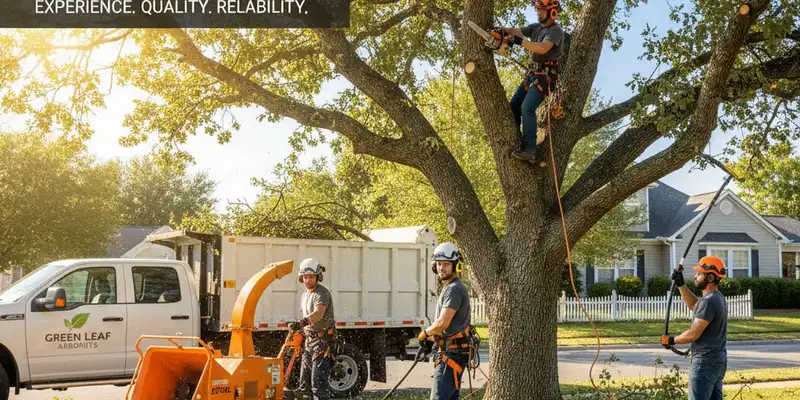
Sustainable Tree Management Best Practices
Table of Contents
What is the amount of salt (Na), Calcium (Ca), and Magnesium (Mg) material in the water? If the water is extremely saline, specific kinds of sprinkler irrigation systems might not work well for your home. A sprinkler or micro-irrigation system can work well at a continuous circulation or lower water application rate, while surface systems require a fairly greater circulation for operating at maximum performance.
For farming farms, the option of will likewise have a close linkage to: The that you can or can not grow. If there is an inequality between the water source, water quality, and the needs of the crop you planted, it might result in yield decrease and even crop failure. The, which can help you validate your total irrigation budget plan.
In this form of irrigation, water is used and dispersed over the soil surface through gravity. Surface irrigation techniques have evolved into a large array of setups. Some of the crucial ones are as below: Perfect for little fields that are level in all directions and incorporated by a dyke to avoid overflow.
Perfect for fields that are sloping, contoured, or rectangular, with free-draining conditions at the lower end. In border watering, water usually streams in between the dykes that divide the home into the sloping borders. In this type of, the water streams down trenches or 'furrows' dug in between the crop rows in the field.
Planning 2026 Watering Frameworks
This system is most suited to row crops, orchards, vineyards, or berry farms that include gentle slopes and any soil type except a coarsetextured one. Suited to fields with close-growing crops on rolling land, this system avoids erosive water build-up on lands too high for border or basin irrigation. All kinds of flood watering are extremely hardly ever utilized in Canada anymore.
For informative purposes, we use a fast introduction listed below, however we do not suggest these methods of irrigation. Water runs through a ditch or pipe and streams over the soil surface through the crops.
Adapted to nearly all crops and irrigable soils, other than in windy, exceptionally hot climates, use water in an exact and regulated way, comparable to the impact of rains. Water circulation happens through a network of pipelines, valves, water pumps, and sprinkler heads. From simple, long 30-foot aluminum pipes with sprinklers along their length to advanced systems with high-end programmable features, there are a variety of sprinkler watering systems available on the market.
Commercial Tree Risk EvaluationIntegrated Landscape Management for Corporate Facilities
They are appropriate to rectangular fields, where you can water in location and easily move from point A to point B in between the irrigation runs. Quickly automated and programmable, set solid set systems offer high application harmony along with a low labour requirement. Using percentages of water at much shorter intervals to a specific location of the crop, the centre-pivot sprinkler irrigation system consists of a span of pipelines filled on a wheeled A-frame tower that is self-propelled around a centre-pivot point.
They are safe and ideal for all field shapes. The conventional spray system, sprinkler watering systems likewise consist of: Water-efficient systems that use a fraction of the water and supply it slowly to the soil. These systems are personalized to satisfy the requirements of a range of plants and crops and are readily available in different types, such as bubblers, misters and foggers.
These systems are set up underground. Water pressure pushes these sprinklers to "turn up" when operational. When the system is shut down, these spring-loaded sprinklers will then go back underground. They release water at a constant but slower rate, permitting the ground to absorb the water at its own speed. These systems are well fit to large parks and stretching golf courses as they can cover a radius of up to 100-feet, with flows as high as 80 gallons per minute (GPM).
Optimizing Landscape Conservation With 2026 Tech
They are well-suited to rectangle-shaped fields, where you can irrigate in location and quickly move from point A to point B in between the irrigation runs. Easily automated and programmable, set strong set systems use high application uniformity in addition to a low labour requirement. Applying percentages of water at much shorter intervals to a particular area of the crop, the centre-pivot sprinkler irrigation system consists of a span of pipelines loaded on a wheeled A-frame tower that is self-propelled around a centre-pivot point.
They are safe and appropriate for all field shapes. The conventional spray system, sprinkler watering systems also consist of: Water-efficient systems that use a fraction of the water and supply it gradually to the soil. These systems are personalized to satisfy the requirements of a range of plants and crops and are offered in different types, such as bubblers, misters and foggers.
When the system is shut down, these spring-loaded sprinklers will then go back underground. These systems are well fit to big parks and sprawling golf courses as they can cover a radius of up to 100-feet, with flows as high as 80 gallons per minute (GPM).

Latest Posts
Sustainable Tree Management Best Practices

Key Benefits of Proactive Tree Management
Future-Proofing Commercial Landscapes With Smart Technology